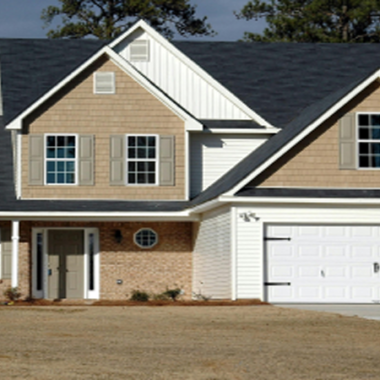
Residential: Includes multi-family housing (apartments/condominiums), single-family rentals, and luxury residential developments.
Commercial (Office): Focuses on workspaces, though it is currently undergoing significant “repricing and restructuring” to adapt to hybrid work models.
Retail: Ranges from high-street shops to regional malls. Currently,grocery-anchored retail and local shopping centers are seeing the strongest investor interest.
Industrial & Logistics: High-demand space used for warehouses, distribution centers, and manufacturing corridors, driven by the continued growth of e-commerce and third-party logistics.
Hospitality: Hotels, resorts, and short-term stay properties.
Land & Development: The acquisition and preparation of land for future residential or commercial expansion.
New & Emerging Sub-Industries
In 2026, the industry is shifting toward “essential” and specialized asset classes. These sectors are becoming increasingly attractive as institutional investors diversify their portfolios:
Data Centers: Rapidly becoming one of the most critical real estate asset classes due to the explosion in AI, cloud computing, and digital infrastructure needs. Demand is currently outstripping power grid capacity.
Senior Housing & Assisted Living: Driven by shifting demographics and aging populations, this has moved from a “niche” sector to a core “essential” real estate category.
Life Sciences & Medical Office: Specialized real estate designed for laboratories, biotech research, and outpatient medical facilities, which require specific technical infrastructure.
Student Housing: A high-demand, counter-cyclical sector that remains resilient even during broader economic downturns.
Self-Storage: An emerging “niche expansion” sector that has shown steady growth as urban living spaces become smaller and demand for flexible storage increases.
Flex-Space & Co-working: Not just office space, but “agile” environments that cater to companies needing short-term, scalable, or hybrid-friendly work footprints.
PropTech & PropOS: A tech-driven sub-industry focused on the “Operating System” of buildings. This includes building automation, energy management sensors, and AI-driven predictive maintenance.
Key Market Trends for 2026
Shift to Tier-2 Cities: Across markets like India, demand is expanding beyond Tier-1 metros toward Tier-2 and Tier-3 cities, driven by improved infrastructure (expressways, metro rail) and decentralized employment hubs.
Institutionalization: There is a growing trend of institutional ownership, supported by the expansion of Real Estate Investment Trusts (REITs).Recent regulatory reforms (such as reclassifying REIT investments as equity instruments) are attracting broader investor participation.
ESG Integration: Sustainability is no longer philosophical; it is a pragmatic necessity. Investors are increasingly prioritizing “net-zero” operational buildings and measurable ESG initiatives to ensure long-term asset value.
AI in Real Estate: AI is moving into the sector to optimize everything from portfolio management and risk assessment to building operations (e.g., smart sensor arrays that manage energy and wellness).